
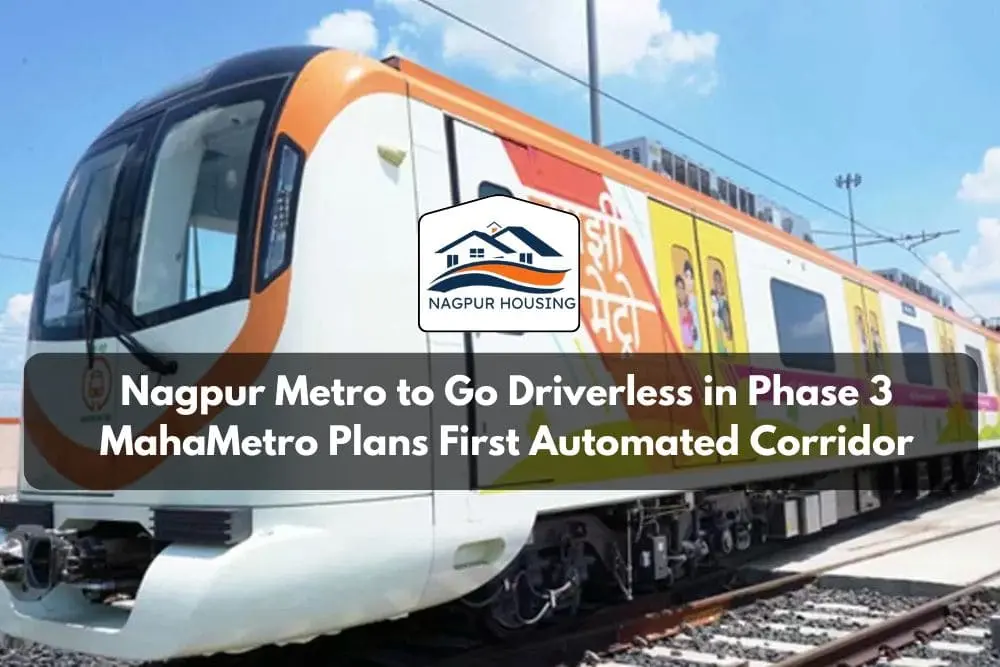
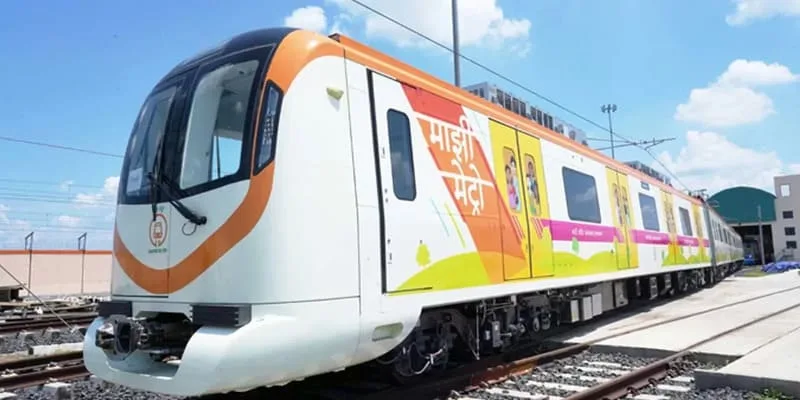
Nagpur Metro to Go Driverless in Phase 3: MahaMetro Plans First Automated Corridor
Nagpur, known as the “Orange City,” is fast transforming into one of India’s most progressive urban centers. From smart city initiatives to world-class transport systems, the city has embraced modernization with open arms. Among its proudest achievements stands the Nagpur Metro, a symbol of innovation and sustainability in urban mobility.
After successfully completing its Phase 1 and moving steadily through Phase 2, the Maharashtra Metro Rail Corporation Limited (MahaMetro) is now looking at the future with even greater ambition. The upcoming Phase 3 will feature something revolutionary driverless metro trains.
Yes, you read that right! Nagpur is preparing to run fully automated, driverless metros that will operate without any human driver inside the cabin. This is more than just a technological upgrade, it’s a leap into the future of urban transportation.
You might like:
- नागपुर मेट्रो गाइड: ईस्ट-वेस्ट कॉरिडोर के सभी स्टेशन और सुविधाएँ
- नागपुर मेट्रो गाइड: नॉर्थ-साउथ कॉरिडोर के सभी स्टेशन और सुविधाएँ
The Big Leap: What Makes Phase 3 So Special?
The proposed Phase 3 corridor will run from Sitabuldi to Koradi, an important route that connects key residential and educational areas with the city center. What makes this line historic is its plan to operate with Unattended Train Operation (UTO), a Grade 4 automation system that allows trains to function completely on their own.
MahaMetro’s Managing Director Shravan Hardikar confirmed that Phase 3 will be designed specifically for automation right from the planning stage. Unlike Phases 1 and 2, which use semi-automated systems, this new corridor will be built with advanced signaling, control systems, and train sets that can manage themselves without a driver.
He explained,
“Driverless technology requires a completely new setup. It’s not just about removing the driver, it’s about integrating the system from scratch. That’s why it’s being implemented on a new corridor rather than upgrading the existing lines.”
This forward-thinking decision puts Nagpur on the same path as cities like Delhi, Mumbai, Bengaluru, and Pune, which are also moving toward driverless metro technology.
Understanding Metro Automation: From Manual to Fully Autonomous
To truly appreciate what Nagpur Metro is doing, it helps to understand how metro automation works.
Metro systems worldwide are categorized into four levels of automation, known as Grades of Automation (GoA):
| Grade | Type | Description |
|---|---|---|
| GoA 1 | Manual Train Operation (MTO) | Driver controls everything manually |
| GoA 2 | Semi-Automated / Automatic Train Operation (ATO) | Train runs automatically, but driver intervenes when needed |
| GoA 3 | Driver-Supervised Automatic Train Operation | Train runs automatically, but an operator remains onboard for safety |
| GoA 4 | Unattended Train Operation (UTO) | Fully driverless; no human presence needed in the cabin |
Currently, Nagpur Metro operates on Grade 2 and 3, a system that uses Communication-Based Train Control (CBTC) technology. In this setup, automation handles most of the driving, but a trained operator stays onboard to supervise.
However, Grade 4 automation planned for Phase 3 is an entirely different world. Once implemented, the metro will be able to start from the depot, run on schedule, stop precisely at every station, and even handle self-checks and maintenance routines all by itself.
Key Features of Nagpur Metro Phase 3
- Driverless Metro (GoA 4 Automation)
- Fully automated, no onboard drivers.
- Uses advanced UTO system with self-navigation and control.
- New Corridor: Sitabuldi to Koradi
- Connects key urban nodes with educational and industrial zones.
- Expected to boost daily ridership and reduce travel time.
- Cutting-Edge Signaling and Safety Systems
- Communication-Based Train Control (CBTC) for precise timing.
- Real-time monitoring through a central control center.
- Energy-Efficient Trains
- Lightweight, eco-friendly train sets.
- Regenerative braking to save power.
- Potential Underground Section
- Phase 3 may include Nagpur’s first underground metro corridor, depending on the final DPR (Detailed Project Report).
- Enhanced Passenger Experience
- Smoother rides, punctual service, and higher frequency of trains.
- Minimal human error and improved safety features.
The Story Behind the Technology
Metro automation doesn’t happen overnight. It requires deep integration of digital signaling, data networks, AI-based safety systems, and robust control centers.
A senior MahaMetro official explained that although it’s possible to upgrade existing lines to Grade 4, it would be very expensive and technically complex. The focus, therefore, is to build automation from the ground up in Phase 3.
This approach is smarter and more cost-effective in the long run. By doing so, Nagpur will future-proof its metro system and align it with global standards.
Why Driverless Metro Matters for Nagpur
Nagpur’s shift toward driverless operations isn’t just about technology, it’s about building smarter, safer, and faster cities. Here’s why this change is so important:
- Improved Safety
- Driverless systems reduce human error.
- Advanced sensors and real-time monitoring ensure safety even in emergencies.
- Increased Efficiency
- Trains can run with perfect timing.
- Shorter headways mean more trains can run on the same line, reducing waiting times.
- Better Passenger Comfort
- Automated systems provide smoother acceleration and braking.
- Consistent travel time enhances commuter confidence.
- Lower Operational Costs
- Reduced dependency on manpower.
- Lower long-term maintenance costs through predictive systems.
- Sustainability and Innovation
- Optimized energy use and regenerative braking help save power.
- Positions Nagpur as a technology-driven smart city.
Pros of Driverless Metro Systems
| Pros | Description |
|---|---|
| Higher Safety Standards | AI and sensors reduce chances of accidents or errors. |
| Consistent Punctuality | Automated schedules ensure on-time operations. |
| Increased Frequency | Trains can run more frequently with less downtime. |
| Reduced Operational Cost | Lower dependency on human operators. |
| Environmentally Friendly | Efficient energy management and reduced wastage. |
| Enhanced Passenger Experience | Comfort and reliability improve public confidence. |
Cons or Challenges Ahead
| Cons/Challenges | Explanation |
|---|---|
| High Initial Investment | Setting up automation needs expensive equipment and systems. |
| Technical Complexity | Requires robust signaling, software, and maintenance setup. |
| Cybersecurity Risks | Digital control systems need protection from hacking or data breaches. |
| Public Adaptation | Some passengers might initially be uncomfortable with driverless travel. |
| Limited Flexibility in Emergencies | While backup systems exist, human instincts in rare scenarios can’t be fully replaced. |
Nagpur in the League of India’s Smart Metros
With this bold step, Nagpur joins a short but elite list of Indian cities exploring driverless metro operations. Delhi Metro has already introduced UTO trains on its Pink and Magenta lines. Mumbai, Bengaluru, and Pune are also preparing for the same transition.
For a growing city like Nagpur, adopting such innovation early means setting the stage for decades of smarter urban growth. It aligns perfectly with the city’s vision of becoming a model for sustainable and technologically advanced urban mobility.
The Road Ahead: What’s Next for Phase 3
The feasibility studies for Phase 3 are already underway. Once the Detailed Project Report (DPR) gets approval, construction will begin. Officials hint that the project may also include the city’s first underground metro segment, marking another milestone in Nagpur’s transit history.
Once complete, the driverless corridor will redefine how people move across the city faster, safer, and smarter than ever before.
A Glimpse into the Future
Imagine stepping into a metro with no driver in sight doors open automatically, the train glides smoothly to the next stop, and announcements play on time. Everything feels seamless. You glance at your watch — and realize that the metro just arrived exactly when it was supposed to.
That’s the future Nagpur Metro is building. A system that runs not just on tracks, but on trust, technology, and precision.
Conclusion: Automation — The New Driver of Progress
Nagpur’s journey from a regional hub to a technology-forward smart city is nothing short of inspiring. The decision to introduce driverless metro trains in Phase 3 reflects MahaMetro’s confidence in innovation and its commitment to the city’s sustainable growth.
This move won’t just improve travel, it will change the way citizens experience mobility itself. With automation leading the way, Nagpur Metro is setting a new benchmark for efficiency, safety, and modern urban living.
The message is clear: In the metro of the future, the driver is technology and Nagpur is ready to embrace it.
FAQs: Nagpur Metro Phase 3 and Driverless Train Plans
Related posts:
 Keystone Realtors Invests Rs 20 Crore in Nagpur Land
 Buying Property Near Swaminarayan Mandir, Nagpur: What You Need to Know
 Discovering Deekshabhoomi: The Heart of Nagpur’s Spiritual and Cultural Legacy
 Nagpur’s Green Transformation: NMC’s 4 Theme-Based Gardens & Real Estate Impact
 Kalmeshwar Development Plan: The Next Real Estate Hotspot Near Nagpur
 Mihan to Soon Boast New Multimodal Logistics Park: A Game-Changer for Central India



Pingback:zyloprim 300 mg price
Pingback:sertraline 25mg
Pingback:metoprolol succinate
Pingback:priligy 30mg
Pingback:finasteride without minoxidil
Pingback:semaglutide vs tirzepatide for weight loss reddit
Pingback:topical minoxidil costco
Pingback:avanafil medical contraindications
Pingback:Sildenafil Absorption Overview
Pingback:Brand vs Generic Approval Standards
Pingback:sildenafil drug information
Pingback:read how sildenafil works
Pingback:read about sildenafil