
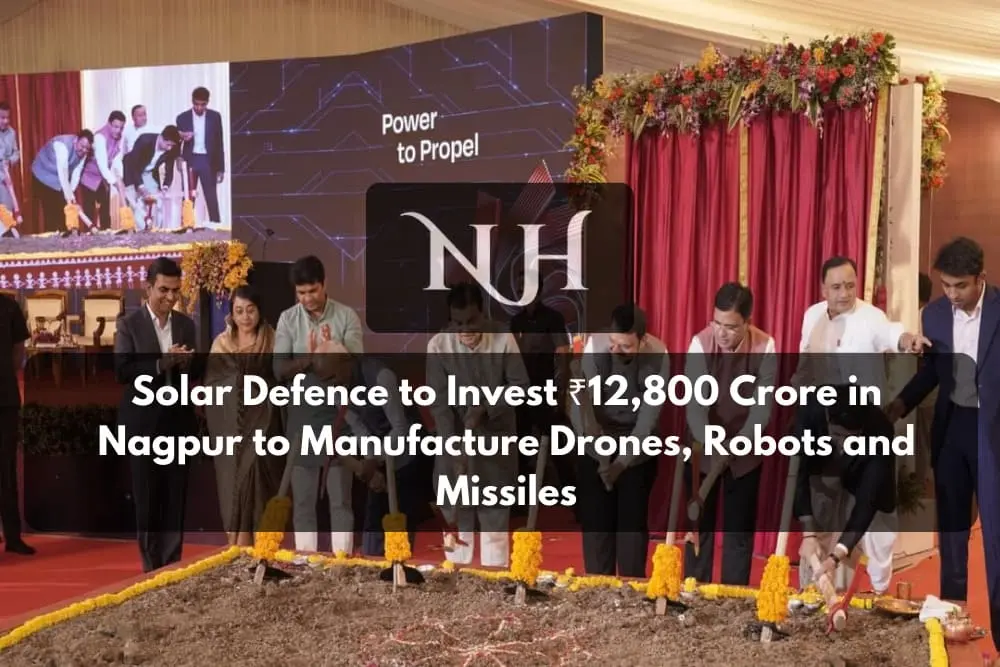
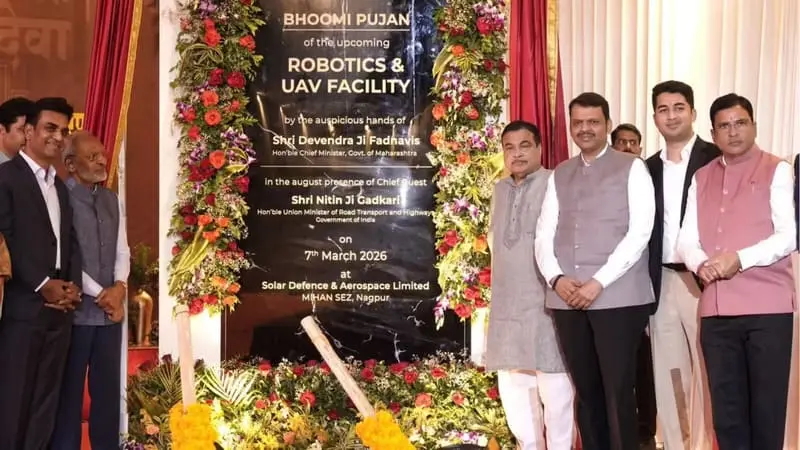
Solar Defence to Invest ₹12,800 Crore in Nagpur to Manufacture Drones, Robots and Missiles
India’s defence sector is entering a new era. Modern warfare is changing fast, and technology is becoming the backbone of national security. Drones, robots, artificial intelligence, and advanced missiles are no longer future ideas they are today’s reality.
In this changing global landscape, Solar Defence and Aerospace Limited has announced a major plan that could reshape India’s defence manufacturing ecosystem. The company plans to invest ₹12,800 crore in Nagpur to build advanced manufacturing facilities focused on drones, robotics, and long-range missile technologies.
This announcement is not just another corporate investment. It is a story about how a city in central India could become a major hub for defence innovation and deep technology. It also shows how Indian companies are stepping forward to support the country’s goal of becoming self-reliant in defence.
Let’s explore what this investment means, why it matters, and how it could transform the future of defence technology in India.
You might like: New Nagpur Project Explained: MoUs, Funding, and the 15-Year Development Plan
A Major Defence Investment for Nagpur
The announcement was made by Satyanarayan Nuwal, Chairman of Solar Defence and Aerospace Limited, who revealed that the company plans to invest more than ₹12,800 crore in advanced manufacturing projects.
The planned investment will support the development and production of:
- Advanced drones (UAVs)
- Military robots
- Long-range missile systems
- Electronic defence components
All these technologies will be manufactured in Nagpur, which is already emerging as an important industrial and logistics hub in central India.
This move is part of the Government of Maharashtra Mega Project and Thrust policy, which encourages large investments in advanced industries.
The plan will unfold over the next decade, but the first phase of development will happen much faster.
Why Solar Defence Is Betting Big on Deep Technology
Modern warfare is very different from what it was a decade ago. Conflicts across the world have shown how drones, robotics, and AI systems can change the battlefield.
Recognising this shift, Satyanarayan Nuwal said the company has decided to invest heavily in deep technology projects.
Deep tech focuses on advanced scientific innovation. It includes areas like:
- Artificial intelligence
- Robotics
- Autonomous systems
- Aerospace engineering
- Advanced electronics
These technologies require large investments and long research cycles, but they also have the power to transform industries.
For Solar Defence and Aerospace Limited, entering deep tech is a natural next step as the company expands its defence manufacturing capabilities.
Production Targets: Thousands of Drones and Robots
One of the most interesting parts of the announcement is the ambitious production plan.
The company aims to build capacity to produce:
- 10,000 drones every year
- 1,000 robots annually
These drones will not be limited to one type. They will include different sizes and designs, depending on the needs of defence forces and other industries.
Some drones will be small and designed for surveillance, while others may be large long-range drones capable of flying at high altitudes for extended periods.
Such production levels could make Nagpur one of the biggest drone manufacturing hubs in India.
Long-Range Missiles and Strategic Systems
Another major focus of the project is the development and manufacturing of long-range missiles.
Missile systems require highly advanced engineering, precision manufacturing, and strict safety standards. Building these capabilities locally strengthens India’s defence readiness.
With this investment, Solar Defence and Aerospace Limited aims to expand its role in India’s strategic defence sector.
It also aligns with the country’s push for defence self-reliance, often referred to as the Atmanirbhar Bharat mission.
By producing key defence systems within India, the country can reduce dependency on imports and strengthen its strategic capabilities.
Timeline: Investment to Roll Out Over the Next Decade
While the total investment plan spans about 10 years, the first phase will move much faster.
According to the company leadership:
- Initial investments will happen in the next 3–4 years
- Infrastructure and production lines will be developed early
- The first robot prototype could be ready within one year
This rapid start shows the company’s commitment to bringing advanced defence technology to India as quickly as possible.
Large defence manufacturing projects usually take many years to develop. However, by starting with early prototypes and pilot production, the company hopes to speed up the innovation cycle.
India’s First AI-Powered Industry 5.0 Defence Factory
One of the most exciting parts of this project is the vision for the new manufacturing facility.
The company plans to build India’s first AI-powered Industry 5.0 manufacturing ecosystem.
To understand this better, let’s look at what Industry 5.0 means.
From Industry 4.0 to Industry 5.0
Industry 4.0 introduced automation, smart factories, and connected machines. Industry 5.0 takes this idea further by combining:
- Artificial intelligence
- Robotics
- Human expertise
- Sustainable manufacturing
Instead of machines replacing humans, Industry 5.0 focuses on collaboration between humans and intelligent machines.
The new facility planned in Nagpur will combine:
- Advanced robotics
- AI-based automation
- Smart production systems
- Human-centered manufacturing practices
This approach ensures high efficiency while also maintaining responsible and sustainable manufacturing.
Advanced AI-Powered Drones
A key focus area for the project will be AI-powered drones.
Drones are becoming essential in modern defence operations. They are used for:
- Surveillance and reconnaissance
- Border monitoring
- Tactical operations
- Disaster response
The facility will design and manufacture advanced drones, including Medium Altitude Long Endurance (MALE) UAVs.
These drones can:
- Fly at high altitudes
- Stay in the air for many hours
- Cover long distances
- Carry advanced sensors and equipment
Such capabilities are critical for modern defence forces.
Beyond Defence: Civilian and Industrial Uses
While defence will remain the main focus, the project will also create technology for civilian and industrial applications.
Drones and robots are increasingly used in many sectors, such as:
Agriculture
Farmers can use drones for crop monitoring, pesticide spraying, and land analysis.
Infrastructure
Drones help inspect bridges, pipelines, and power lines.
Disaster Management
Robots and UAVs can assist rescue teams during floods, earthquakes, or fires.
Logistics
Autonomous drones could deliver goods in remote areas.
Because of these possibilities, the technologies developed by Solar Defence and Aerospace Limited could support both defence and commercial industries.
This concept is known as dual-use technology.
Job Creation and Economic Impact
Large investments like this can significantly impact the local economy.
The project is expected to create thousands of direct and indirect jobs in Nagpur.
New opportunities may emerge in areas like:
- Aerospace engineering
- Robotics design
- AI software development
- Electronics manufacturing
- Supply chain management
Local businesses, suppliers, and technology startups may also benefit from the growing defence ecosystem.
Over time, the city could attract more companies working in advanced technology.
Nagpur: A Rising Technology Hub
Located at the geographical center of India, Nagpur has been steadily developing as an industrial hub.
The city already has strong infrastructure, including:
- Major highways
- Rail connectivity
- Cargo and logistics facilities
- Growing industrial parks
Because of its central location, Nagpur offers strategic advantages for manufacturing and distribution.
With this new defence investment, the city could become a key centre for aerospace and defence technology.
Strengthening India’s Defence Manufacturing
India has been working to strengthen its domestic defence manufacturing capabilities.
Over the past few years, the government has introduced several initiatives to support this goal, including:
- Defence production incentives
- Import restrictions on certain defence equipment
- Support for private defence companies
- Policies encouraging research and development
Investments by companies like Solar Defence and Aerospace Limited help accelerate this progress.
They bring private sector innovation into the defence ecosystem, which can lead to faster technology development.
The Role of Private Companies in Defence Innovation
Traditionally, defence manufacturing in India was dominated by government organizations.
However, in recent years, private companies have started playing a larger role.
Private sector involvement brings several benefits:
- Faster innovation
- Flexible manufacturing processes
- Global partnerships
- Efficient supply chains
With its new investment, Solar Defence and Aerospace Limited aims to become a key player in this growing ecosystem.
Challenges and Opportunities Ahead
Large defence technology projects also come with challenges.
Developing advanced drones, robotics, and missile systems requires:
- Highly skilled engineers
- Advanced research facilities
- Strong cybersecurity measures
- Strict quality and safety standards
However, these challenges also create opportunities for innovation.
India has a large pool of talented engineers and technology experts. With the right investments and infrastructure, the country can build world-class defence technologies.
A Vision for the Future
The ₹12,800 crore investment is more than just a business expansion.
It represents a vision for the future of defence technology in India.
The project aims to build:
- Advanced drone manufacturing
- Robotics innovation
- AI-powered factories
- Strategic defence capabilities
All these elements together could help India move closer to becoming a global defence technology leader.
Conclusion
The decision by Solar Defence and Aerospace Limited to invest ₹12,800 crore in Nagpur marks an important step for India’s defence and technology sectors.
By focusing on drones, robotics, and long-range missiles, the company is preparing for the future of modern warfare.
At the same time, the project will also support civilian and industrial innovation through dual-use technologies.
For Nagpur, the investment could transform the city into a major defence manufacturing hub. For India, it represents another move toward technological independence and global competitiveness.
As the world continues to change, investments in deep technology will play a key role in shaping the future. With ambitious plans and strong leadership, this project could become one of the most important defence manufacturing developments in the country.
Related posts:
 Keystone Realtors Invests Rs 20 Crore in Nagpur Land
 Buying Property Near Swaminarayan Mandir, Nagpur: What You Need to Know
 Discovering Deekshabhoomi: The Heart of Nagpur’s Spiritual and Cultural Legacy
 Nagpur’s Green Transformation: NMC’s 4 Theme-Based Gardens & Real Estate Impact
 Kalmeshwar Development Plan: The Next Real Estate Hotspot Near Nagpur
 Mihan to Soon Boast New Multimodal Logistics Park: A Game-Changer for Central India



Pingback:metoclopramide 10mg
Pingback:ciprofloxacin hydrochloride
Pingback:clozapina
Pingback:vfend pi
Pingback:orlistat vitamin supplement
Pingback:cialis 5mg images
Pingback:cenforce 50 mg uses
Pingback:vidalista 60mg side effects
Pingback:omeprazole vs plavix
Pingback:zantac 360 recall
Pingback:zudena pills
Pingback:fincar 5mg price in nepal