
Nagpur Fuel Crisis Explained: Why Petrol Pumps Ran Out and What’s Coming Next
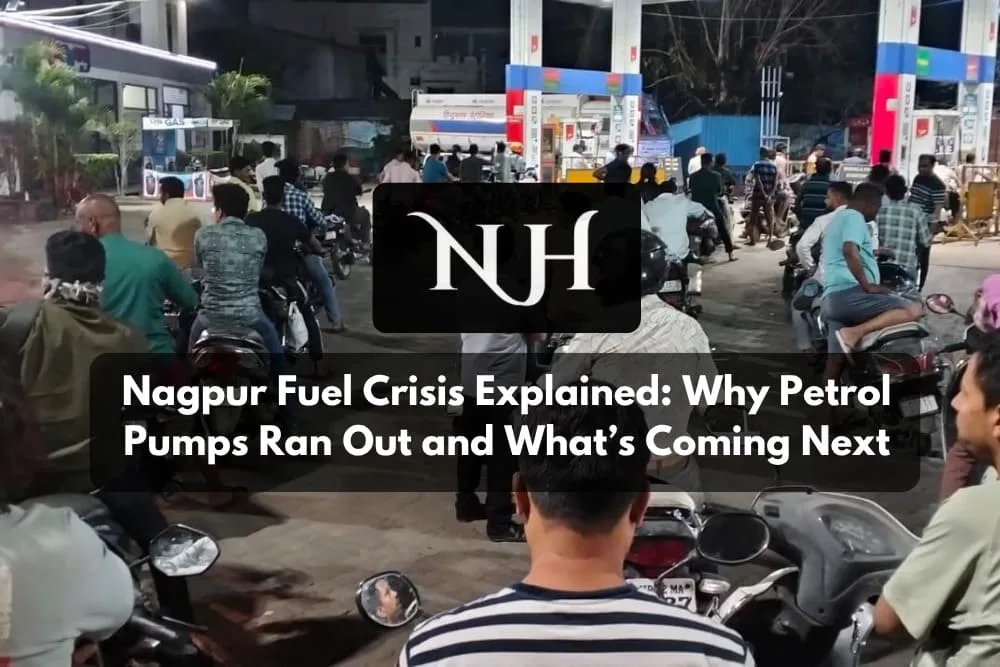
Nagpur woke up on Tuesday morning to an unusual sight long, snaking queues of vehicles stretching across busy roads, horns blaring, and anxious motorists glancing repeatedly at empty fuel pumps. What began as rumors of a petrol shortage on Monday night quickly escalated into a full-blown panic across the city, leaving residents frustrated, stranded, and uncertain about when the fuel crisis would end.
By midday, at least 24 petrol pumps across Nagpur and its outskirts, including Wadi, Rameshwari, near the CID office, and Godhani, had run completely dry. Many pumps were forced to shut down, leaving motorists with few options. The city’s traffic, already a daily struggle, slowed to a crawl as motorists jostled for fuel at the remaining functional outlets.
Early Morning Panic: Rumors Turn Reality
The day began like any other, but the undercurrent of anxiety was palpable. Social media posts, WhatsApp forwards, and word-of-mouth messages about an impending fuel shortage triggered a wave of panic buying. By the time the sun rose over Nagpur, petrol pumps that were usually quiet in the morning had already witnessed unusually long queues.
Motorists rushed to the nearest petrol stations to fill their tanks, fearing they might not get fuel later in the day. “Even before I had my morning tea, I was already planning which pump I should head to,” said Jay Pardhi, a local resident. He eventually refueled at North Ambazari Road, waiting nearly 45 minutes to get petrol at ₹113 per litre. “I rushed because my parents called and asked me to fill the tank. Everyone seemed to be in the same panic,” he said.
Dry Pumps and Disrupted Routines
As the morning progressed, the shortage became evident. Fuel outlets in multiple areas ran dry, forcing staff to down their shutters. Sources in the district administration revealed that fuel tankers had not arrived over the weekend, creating a gap in supplies. The situation was further exacerbated by the recent decision of oil companies to stop credit supplies to petrol pump dealers.
“This combination of delayed deliveries and financial restrictions on pumps created a perfect storm,” said a district official. “Fresh supplies are expected to normalize in the coming days, but until then, motorists will have to cope with limited availability.”
The remaining operational pumps turned into hotspots of chaos. With long queues spilling onto the main roads, traffic snarls became inevitable. At RBI Square, the queue extended all the way to Kingsway Hospital, turning arterial roads like Wardha Road, Amravati Road, Sitabuldi, and Sadar into bottlenecks. Vehicles inched forward slowly, engines turned off under the scorching sun, and patience was tested at every turn.
Panic Buying and Premium Fuel Choices
Many motorists opted for full-tank refueling, prioritizing quantity over cost. Panic buying drove people to spend extra money on fuel, often choosing premium grades when regular petrol ran out. In several cases, those waiting for hours were forced to either pay more for costlier fuel or return home empty-handed.
The frenzy left petrol pump staff overwhelmed. Temporary queues were created to separate two-wheelers from four-wheelers, but with tempers fraying, disputes erupted. Instances of line-jumping escalated into arguments, and in a few cases, minor scuffles broke out.
Mahesh Barapatre, waiting near Gandhi Sagar Lake, described the ordeal as exhausting. “It has been nearly an hour of constant honking and waiting. Whether this is panic buying or an actual shortage, the reality is that we are not getting petrol, which feels as essential as roti, kapda aur makan,” he lamented.
Traffic Chaos Amplifies City’s Woes
The impact of the petrol shortage was not limited to fuel stations alone. With vehicles lining up outside pumps and spilling onto roads, traffic flow across Nagpur came to a near standstill in several areas. Emergency services, office-goers, and daily commuters found themselves stuck in slow-moving traffic, sometimes for hours.
Local authorities tried to manage the chaos by deploying traffic police at key junctions and major roads. Still, the volume of vehicles and the urgency of motorists seeking fuel made traffic management a daunting task. Long queues turned minor roads into congested highways, and motorists reported spending more time at pumps than at their destinations.
Causes Behind the Shortage
While rumors and panic buying played a role in worsening the situation, underlying causes contributed to the shortage. Officials pointed to two main reasons:
- Delayed Fuel Deliveries: Fuel tankers did not reach Nagpur over the weekend, creating gaps in supply at petrol pumps.
- Policy Changes by Oil Companies: Recent decisions by oil firms to stop credit supplies to dealers meant that many pumps could not replenish stocks quickly, leading to closures.
Additionally, geopolitical tensions in West Asia have led to concerns about fuel availability, indirectly influencing consumer behavior. As a result, even when fuel supplies were expected, motorists rushed to pumps, fearing further scarcity.
Stories from the Ground
On the streets of Nagpur, the panic was visible everywhere. Families in cars anxiously checked fuel gauges, delivery drivers worried about meeting deadlines, and two-wheeler riders joined long queues under the scorching sun.
At one pump in Wadi, a local resident narrated how he waited for more than an hour only to be told the station had run dry moments before his turn. “I had no choice but to head to another station, which was even farther,” he said. Others spoke about splitting their trips, filling partial tanks, or opting for expensive premium fuel as their only option.
Staff at petrol pumps faced an equally challenging day. Managing long queues, dealing with frustrated customers, and ensuring some order in the chaos required constant vigilance. Temporary barriers were set up to organize vehicles, but human patience was stretched thin. “We tried to separate two-wheelers and cars, but it was almost impossible. Everyone is anxious, and tempers flare easily,” said one pump attendant.
Partial Replenishments and Lingering Anxiety
By evening, a few pumps reported partial replenishment of fuel stocks. However, this did little to ease anxiety, as queues remained long and uncertainty continued. Residents were unsure whether the shortage was real or exaggerated, but one thing was certain: the city’s normal rhythm had been disrupted.
Many commuters abandoned queues midway, frustrated by long waits and unclear prospects. Some reported traveling across the city searching for pumps that still had fuel, while others postponed travel plans entirely. The shortage, temporary as it may be, highlighted the vulnerability of urban life to disruptions in essential supplies.
Lessons from Nagpur’s Fuel Crisis
While the immediate concern for Nagpur residents is securing petrol, the crisis offers broader lessons:
- Importance of Timely Supply: Even minor delays in delivery can trigger panic if stocks are low or rumors spread.
- Need for Clear Communication: Authorities and fuel companies should communicate supply status transparently to prevent unnecessary panic.
- Preparedness for Geopolitical Risks: Events in distant regions, like West Asia, can have a direct impact on local fuel availability, and cities need contingency plans.
- Traffic Management During Crises: Long queues spilling onto roads highlight the importance of proactive traffic control measures to prevent gridlock.
Moving Forward: What Residents Can Expect
District authorities have assured that fresh supplies are expected to normalize in the coming days. Petrol pumps will gradually replenish stocks, and some order is likely to return to the city’s roads. In the meantime, residents are advised to remain calm, avoid panic buying, and consider alternative commuting options where possible.
Motorists, meanwhile, continue to adapt. Carpooling, use of public transport, and careful planning of travel routes can help reduce congestion. Some have even started monitoring fuel availability online or via apps to avoid long waits at dry pumps.
A City Coping With Chaos
The panic that gripped Nagpur serves as a reminder of how quickly everyday life can be disrupted. What started as rumors evolved into a real struggle for fuel, affecting traffic, livelihoods, and the daily routine of thousands. Yet, amid the chaos, stories of patience, solidarity, and small victories—like finally filling a tank after a long wait—offer a glimpse of the human spirit in action.
By evening, as some pumps reopened and queues moved forward, residents breathed a small sigh of relief. The city, though slowed by hours of waiting and frustration, displayed resilience. But the underlying message remains clear: urban life, no matter how routine, is only as stable as the supply chains that sustain it.
Nagpur’s experience on Tuesday is a case study in how rumors, fear, and delayed logistics can converge to create a crisis. And while the fuel shortage may be temporary, the lessons it leaves behind—about planning, communication, and community response—are lasting.
Related posts:
 Nagpur: Leading Tier-II City for Real Estate Growth in India
 Keystone Realtors Invests Rs 20 Crore in Nagpur Land
 Buying Property Near Swaminarayan Mandir, Nagpur: What You Need to Know
 Discovering Deekshabhoomi: The Heart of Nagpur’s Spiritual and Cultural Legacy
 Nagpur’s Green Transformation: NMC’s 4 Theme-Based Gardens & Real Estate Impact
 Kalmeshwar Development Plan: The Next Real Estate Hotspot Near Nagpur