
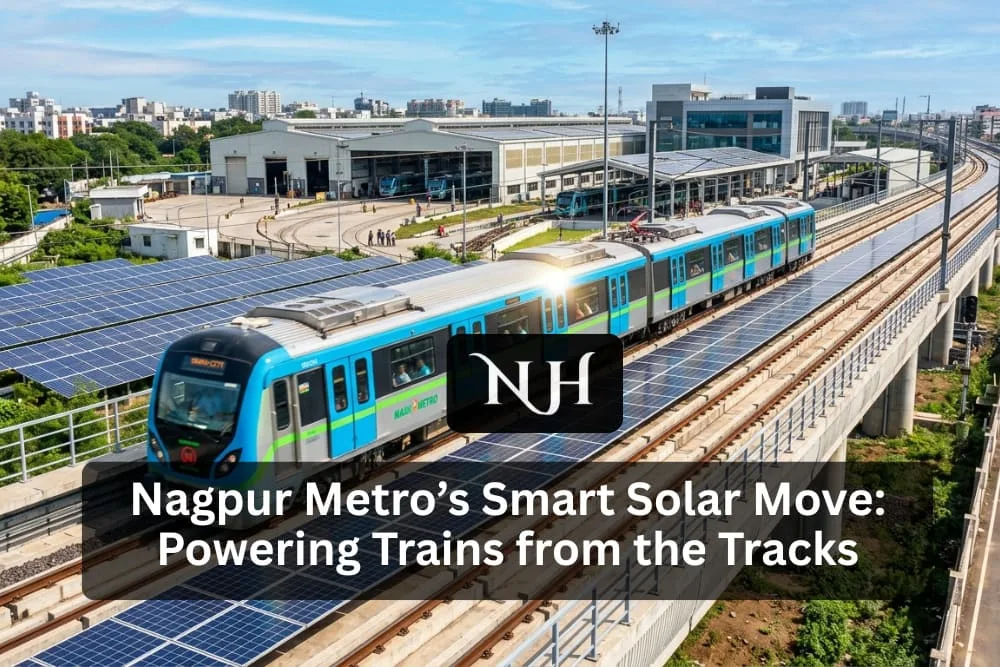
Nagpur Metro’s Smart Solar Move: Powering Trains from the Tracks
Cities are growing fast. So, the need for clean energy is growing even faster. In the middle of this change, Nagpur has done something simple yet powerful. Instead of looking for new land, it used space that was already there — right between metro tracks.
And that small idea is now making big news.
You might like: Nagpur Metro to Go Driverless in Phase 3: MahaMetro Plans First Automated Corridor
A First in India
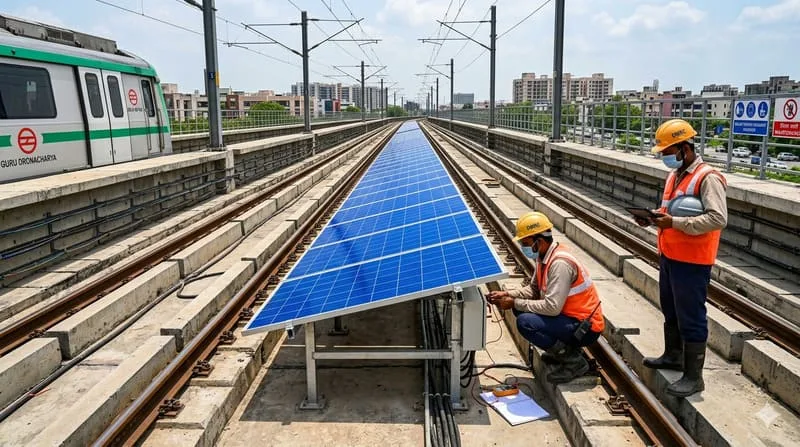
The Maharashtra Metro Rail Corporation Limited (MMRCL) has taken a bold step. At the Hingna depot, the team has installed solar panels between live metro tracks. Yes, right in the space where trains run every day.
This is not just another solar project. It is the first time in India that such a system has been used in a working metro environment.
Usually, that space stays empty. But now, it is producing clean energy without disturbing train operations.
How This Solar Project Works
Let’s break it down in a simple way.
- The solar panels are placed in the inter-track space
- The total length of the installation is about 200 metres
- It uses monocrystalline solar panels, which are known for high efficiency
- The system has a capacity of 50 kilowatt peak (kWp)
Even though the setup looks compact, the output is impressive.
Every year, this system can generate around 70,000 units of electricity. That’s enough to power key operations inside the depot.
Why This Idea Matters
At first, it may seem like just a small project. But in reality, it solves multiple problems at once.
1. Uses Wasted Space
The gap between tracks was not used before. Now, it has become a source of clean energy.
2. No Need for Extra Land
Land is expensive, especially in cities. This solution avoids that issue completely.
3. Zero Impact on Operations
Even with panels installed, metro trains run smoothly. There is no interference at all.
Big Environmental Benefits
This project is not just about saving money. It is also about saving the environment.
- It helps cut around 65 tonnes of carbon emissions every year
- It reduces dependence on traditional power sources
- It supports India’s push toward green energy
So, while trains move people, this system quietly helps the planet.
Powering the Depot Directly
Another smart part of this project is how the energy is used.
The electricity generated does not go far. Instead, it is fed directly into the depot’s internal system.
That means:
- Lower electricity bills
- Less load on the city grid
- Better energy efficiency
In short, it is a closed-loop system that makes full use of what it produces.
A Model for the Future
This is just a pilot project. But its success opens many doors.
As Nagpur Metro expands its network towards Hingna, Kanhan, and Butibori, this idea can be scaled up.
Other metro cities in India can also follow this model. After all, many metros have similar unused track space.
If adopted widely, this approach could change how urban transport systems use energy.
Nagpur Steps into the Spotlight
With this innovation, Nagpur is no longer just another city with a metro. It has become a leader in smart transport solutions.
This move shows that innovation does not always need big budgets. Sometimes, it just needs a fresh way of thinking.
And in this case, the thinking was simple:
“Why not use the space we already have?”
Final Thoughts
The Nagpur Metro solar project is a great example of how small ideas can create big impact.
It is efficient. It is practical. And most importantly, it is sustainable.
As cities look for cleaner ways to grow, such solutions will become more important than ever.
Nagpur has taken the first step. Now, it will be interesting to see who follows next.
Related posts:
 Keystone Realtors Invests Rs 20 Crore in Nagpur Land
 Buying Property Near Swaminarayan Mandir, Nagpur: What You Need to Know
 Discovering Deekshabhoomi: The Heart of Nagpur’s Spiritual and Cultural Legacy
 Nagpur’s Green Transformation: NMC’s 4 Theme-Based Gardens & Real Estate Impact
 Kalmeshwar Development Plan: The Next Real Estate Hotspot Near Nagpur
 Nagpur Is Building a Bird Paradise Right on the Highway—Here’s What to Expect